
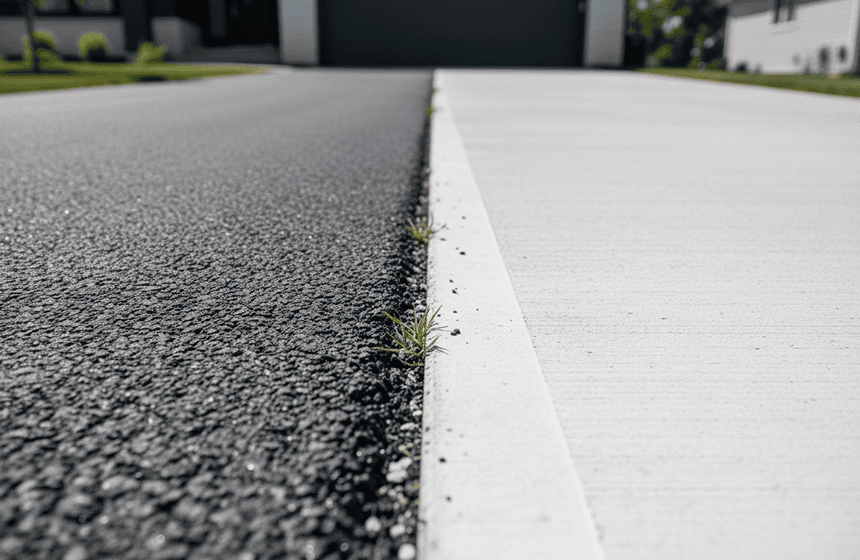
Asphalt vs Concrete Driveway: Which One Is Right for You?
Compare asphalt and concrete driveways by cost, lifespan, and Maryland climate. Get honest guidance from a Stevensville asphalt paving company.
Asphalt Paving vs Concrete Driveway
Choosing between an asphalt and a concrete driveway is one of the bigger surface decisions a homeowner makes.
Both hold up well when they are installed correctly, but they behave differently on cost, upkeep, and how they handle Maryland weather.
Asphalt usually costs less upfront and flexes better with cold-weather freeze-thaw movement, while concrete tends to last longer and offers more finish options at a higher price.
The right choice depends on your budget, how long you plan to stay, and the conditions on your property.
A durable driveway starts below the visible surface. Whichever material you pick, the base, grading, and drainage matter as much as the top layer.
Asphalt vs Concrete: Quick Comparison
The ranges below reflect general industry figures.
Actual cost, lifespan, and performance depend on your site, the base preparation, drainage, and how the driveway is maintained.
| Factor | Asphalt | Concrete |
|---|---|---|
| Upfront cost | Lower; commonly the cheaper install | Higher; typically a larger initial investment |
| Typical lifespan | About 15 to 30 years with upkeep | About 30 to 40+ years |
| Cold weather | Flexes with freeze-thaw movement | More prone to cracking in hard freezes |
| Hot weather | Can soften in sustained high heat | Stays firm; lighter color runs cooler |
| Maintenance | Sealcoat every few years; frequent care | Less frequent, but repairs cost more |
| Repairs | Easier and less costly to patch | Harder and pricier to fix |
| Appearance | Dark, uniform finish | More color and finish options |
| Cure / reopen time | Usable in a few days | Longer wait before full use |
Cost: What You Pay Upfront and Over Time
Asphalt is generally the lower-cost option to install.
Its petroleum-based material and simpler installation typically make it cheaper upfront than concrete.
That price gap is the main reason many homeowners lean toward asphalt.
Concrete usually costs more to install, and repairs are pricier when they are needed. Its longer lifespan can offset some of that over decades, but the initial investment is higher.
Cost on any single project depends on several factors:
- Driveway size and layout
- Condition of the existing surface and whether it must be removed
- Excavation and base preparation
- Grading and drainage work
- Material type and thickness
- Site access and mobilization
- Edge work and transitions to existing pavement
Lifespan and Durability
Concrete generally lasts longer.
With good installation and upkeep, concrete driveways commonly reach 30 to 40 years or more, while asphalt driveways commonly last about 15 to 30 years.
Those numbers are not fixed. Real-world performance depends on:
- Base preparation and compaction
- Drainage and how well water moves off the surface
- Traffic and vehicle weight
- Climate and freeze-thaw exposure
- Material quality and installation
- Ongoing maintenance such as sealing and crack treatment
Maintenance and Repairs
Asphalt needs more routine attention.
It benefits from sealcoating every few years to slow oxidation and reduce water and sunlight exposure.
Crack treatment and small patches are part of normal care.
The upside is that asphalt is easier and less expensive to repair, and repairs blend into the surface well.
Concrete needs less frequent maintenance, but when it cracks, stains, or settles, repairs are harder and more costly, and patches are more visible.
Sealing helps but is needed less often than with asphalt.
One important note:
Sealcoating is a preventive surface treatment.
It can slow wear and improve appearance, but it does not:
- Repair base failure
- Fill large structural cracks
- Level settled pavement
If the failure reaches the base, the fix is a repair or replacement, not a coating.
How Each Material Handles Maryland Weather
Climate is one of the most practical factors for Stevensville and the surrounding Mid-Atlantic.
Central Maryland sees repeated freeze-thaw cycles each winter, when temperatures swing above and below freezing. Water works into surface openings, freezes, expands, and widens the damage over time.
Asphalt flexes with that temperature movement, which is part of why it performs reasonably well in cold, freeze-thaw climates.
Concrete is more rigid and can be more prone to cracking under hard freezes, though a proper mix and installation reduce that risk. In sustained high summer heat, asphalt can soften, while concrete stays firm and its lighter color runs cooler.
Maryland delivers both hot summers and multiple freeze-thaw events each winter, so either material can work here.
On the Eastern Shore and near the Chesapeake, salt air and steady rainfall add extra stress, which makes drainage and regular maintenance more important regardless of the surface you choose.
Appearance and Options
Concrete offers more design flexibility, including color, stamped patterns, and different finishes.
Asphalt has a clean, uniform dark finish with limited color choices.
If a specific decorative look is a priority, concrete has the edge. If you want a straightforward, functional surface at a lower cost, asphalt fits well.
How to decide between asphalt and concrete
Use these questions to narrow the choice:
Budget:
Asphalt usually costs less to install; concrete asks for a larger upfront investment.
Time in the home:
Concrete’s longer lifespan favors owners staying many years; asphalt suits a lower initial spend.
Maintenance tolerance:
Asphalt needs periodic sealing and crack care; concrete needs less frequent upkeep but pricier repairs.
Appearance:
Concrete offers decorative finishes; asphalt offers a simple uniform surface.
Repairs:
Asphalt is easier and cheaper to patch; concrete repairs are harder to blend.
Why Choose Premier Paving for Your Driveway
Premier Paving is a family-owned company based in Stevensville, MD, with more than 30 years of combined experience in residential and commercial paving.
As an asphalt paving company serving Stevensville and communities across Maryland, our focus is on doing the job correctly the first time.
- We inspect the existing surface and site conditions before recommending anything.
- We evaluate grading and drainage, because a lasting driveway starts below the surface.
- We prepare and compact the base rather than paving over problems.
- We give practical recommendations instead of pushing one option onto every project.
- We explain scope, timing, and maintenance in plain language.
Get a Free Estimate from Premier Paving to talk through your driveway options.
Frequently Asked Questions about asphalt vs concrete driveway
Is it better to have an asphalt driveway or a concrete driveway?
Neither is better for every home. Asphalt costs less upfront and flexes well with cold-weather freeze-thaw movement, which suits Maryland winters. Concrete lasts longer and offers more finish options at a higher price. The better choice depends on your budget, how long you plan to stay, and your site conditions.
What are the disadvantages of asphalt?
Asphalt has a shorter typical lifespan than concrete and needs more routine maintenance, including sealcoating every few years and periodic crack treatment. It can soften in sustained high heat and comes in a single dark color with limited decorative options. Its strengths are lower upfront cost, cold-weather flexibility, and easier repairs.
What is the cheapest option for driveways?
Among paved surfaces, asphalt is usually the lower-cost option to install compared with concrete. Aggregate surfaces such as stone and gravel can cost less upfront in some projects, though they carry their own maintenance needs. The most accurate way to compare cost is a site assessment, since price depends on size, base condition, grading, drainage, and access.
Which lasts longer, concrete or asphalt?
Concrete generally lasts longer. Concrete driveways commonly reach 30 to 40 years or more, while asphalt driveways commonly last about 15 to 30 years. These ranges assume proper installation and upkeep. Base preparation, drainage, traffic, climate, and maintenance all affect how long either surface actually lasts.
What are the disadvantages of concrete driveways?
Concrete costs more to install than asphalt, and repairs are harder and more expensive when cracks, stains, or settlement occur. It can be more prone to cracking in hard freezes without the right mix and installation, and it takes longer to cure before full use. Its advantages are a longer lifespan, less frequent maintenance, and more finish options.
What type of driveway lasts the longest?
Among common driveway materials, concrete tends to last the longest, often 30 to 40 years or more when installed and maintained well. Some paver systems can also last a long time. Longevity for any surface depends heavily on the base, drainage, traffic, and ongoing maintenance rather than the material alone.
How many years should an asphalt driveway last?
An asphalt driveway commonly lasts about 15 to 30 years. Reaching the upper end of that range depends on proper base preparation, good drainage, regular sealcoating, prompt crack repair, and avoiding heavy loads on the edges. In Maryland’s freeze-thaw climate, staying current on maintenance makes a meaningful difference