
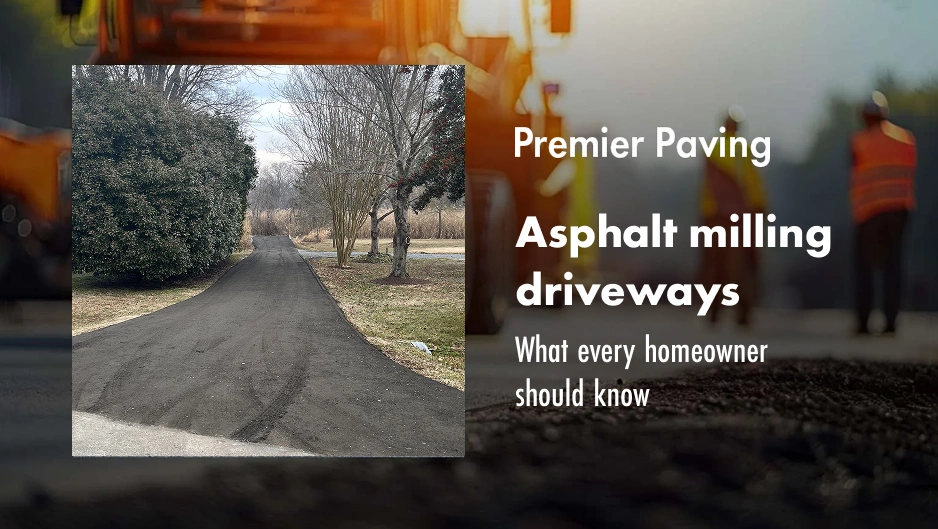
Your driveway is cracked, rutted, and past its prime. Before you agree to a full replacement and brace for a significant bill, there is a smarter, faster, and considerably more affordable path forward: asphalt milling driveways.
Milling has become one of the most popular driveway restoration solutions across the country, and for good reason. The process removes only the damaged surface layer, recycles that material, and leaves a clean, level base ready for a fresh overlay. You get a like-new asphalt driveway at a fraction of the cost of full demolition, and the environment benefits, too.
This guide covers everything homeowners need to make a confident, well-informed decision: what asphalt milling actually is, how much it costs in 2026, how it compares to full replacement, what the job day looks like, and how to choose a licensed contractor you can trust.
What is asphalt milling?
Asphalt milling is the mechanical process of removing the top 1 to 3 inches of deteriorated asphalt pavement using a cold-planing machine. The machine grinds away cracked, rutted, or uneven surface material, leaving a clean, textured base that bonds directly with a new asphalt layer. The goal is full surface restoration without demolishing and disposing of the entire driveway.
The terms asphalt milling, cold planing, and pavement profiling all refer to the same process. If you encounter any of these terms when speaking with contractors, they mean the same thing.
The milled material does not go to waste. It becomes Reclaimed Asphalt Pavement (RAP), which is collected, screened, and recycled into new hot-mix asphalt or used directly as a compacted driveway surface material. According to the Federal Highway Administration, asphalt is the most recycled construction material in the United States, with a recovery rate exceeding 99 percent.
How does cold planing work step by step?
The milling process follows a precise sequence:
- Surface assessment: The contractor evaluates crack patterns, depth of damage, base integrity, and drainage slope to determine the correct milling depth.
- Equipment setup: A cold-planing machine fitted with a rotating drum of carbide cutters is lowered onto the driveway surface.
- Grinding: The machine moves forward, removing 1 to 3 inches of asphalt at a controlled, uniform depth.
- Collection: Milled material (RAP) is conveyed directly into a haul truck for transport and recycling.
- Grading and leveling: The exposed base is graded to correct drainage slope and eliminate low spots.
- New asphalt overlay: Hot-mix asphalt is applied, compacted with a roller, and finished at the edges.
- Final inspection: The contractor checks grade, slope, and edge transitions before sign-off.
What equipment do asphalt milling contractors use?
The core piece of equipment is the cold planer, sometimes called a milling machine or pavement planer. It uses a large rotating drum fitted with carbide-tipped teeth to grind the asphalt to a precise depth. Residential jobs typically use compact drum machines suited to driveway widths. Supporting equipment includes graders for surface leveling, vibratory rollers for compaction, and haul trucks for RAP removal.
7 key benefits of asphalt milling for your driveway
Asphalt milling driveways deliver a combination of advantages that no other driveway restoration method can fully match.
- Costs 50 to 75 percent less than full driveway replacement
- Driveable the same day milling is complete
- Produces a superior bonding surface for the new asphalt overlay
- Corrects drainage issues and slope problems that patching alone cannot fix
- Recycled RAP material reduces landfill waste and environmental impact
- Preserves the structural base layer, saving excavation time and cost
- Extends driveway lifespan by 20 to 30 years with proper maintenance
Cost savings vs. full replacement
A standard two-car driveway (approximately 500 square feet) in central Maryland runs considerably less with milling and a fresh overlay than a full tear-out and rebuild. That difference matters for any household budget, and the long-term durability is comparable when the base layer is sound.
Eco-friendly: how RAP recycling works
Every ton of milled asphalt collected as reclaimed asphalt pavement (RAP) is a ton that does not go into a landfill. The Federal Highway Administration confirms that the US recycles over 99 percent of its milled asphalt, making it the most recycled construction material in the country. RAP can be reprocessed into new hot-mix asphalt or used directly as a compacted driveway surface, reducing the energy and raw materials required for fresh paving.
Better drainage and a level surface
One of the most overlooked advantages of milling is its ability to correct slope and drainage at the surface level. Cold planing removes accumulated layers and high spots, restoring the original grade. Curb line milling can rebuild the transition from your driveway to the road where years of patching and overlay have raised the grade unevenly. No patching job or simple overlay can achieve this level of precision.
Asphalt milling vs. full driveway replacement: which is right for you?
This is the central question most homeowners face. The answer comes down to the condition of your base layer, not the surface.
When should you choose milling?
Milling is the right call when the structural base of your driveway is still sound. If your driveway shows surface cracking, moderate rutting, drainage problems from uneven grade, or extensive alligator cracking confined to the top layer, asphalt milling restores it completely. Because the base is intact, there is no need to excavate, haul away, and rebuild from the ground up.
When is full replacement necessary?
Full replacement is required when the base itself has failed. Signs include deep sinkholes, severe subsidence, subgrade failure due to poor drainage below the surface, or root damage that has compromised the foundation. In these cases, milling the surface alone will not solve the underlying structural problem, and the new overlay will fail prematurely.
Side-by-side comparison table
|
Factor |
Asphalt milling |
Full replacement |
|
What is replaced |
Top 1-3 inches of surface only |
Entire driveway down to subgrade |
|
Base condition needed |
Base must be structurally sound |
Not required — full rebuild |
|
Typical timeline |
1-2 days |
3-5 days |
|
Eco-friendliness |
RAP recycled at 99%+ rate |
Generates more demolition waste |
|
Best suited for |
Surface failure, intact base |
Failed base or major drainage issues |
|
Traffic disruption |
Driveable same day post-milling |
24-72 hrs after new asphalt |
The bottom line: if your contractor inspects the base and finds it structurally sound, milled asphalt driveways deliver a comparable 20-to-30-year lifespan at a fraction of replacement cost. Ask your contractor to assess the base before agreeing to a full replacement quote.
How much does asphalt milling cost? [2026 pricing]
Cost is one of the most searched questions for asphalt milling driveways. Here is a transparent breakdown of what homeowners should expect in 2026.
Cost per square foot breakdown
- Asphalt milling and overlay (installed): approximately $2 to $5 per square foot
- RAP material only (used as driveway surface): approximately $10 to $20 per ton
- Labor component: approximately $5 to $7 per square foot
- Standard two-car driveway (400 to 600 sq ft): approximately $800 to $3,000 total
- Seal coating after installation: approximately $0.25 to $0.75 per square foot
*All cost ranges above are general estimates for planning purposes only. Pricing varies by property size, milling depth, site conditions, and contractor rates in your area. Request itemized written quotes from at least three MHIC-licensed contractors before committing to a price.*
Factors that affect milling costs
- Milling depth required (deeper cuts mean more equipment time and RAP removal)
- Total driveway square footage and shape complexity
- Site preparation needs, including grading, drainage correction, and base repairs
- Distance and local labor rates in your area
- Season and demand (spring and summer typically carry premium pricing in peak season)
- Disposal and recycling fees for removed RAP material
Asphalt milling vs. gravel vs. concrete: cost comparison
|
Material |
Approx. cost per sq ft |
Avg. 500 sq ft driveway* |
Est. lifespan |
|
Asphalt milling + overlay |
$2-$5 |
$1,000-$2,500 |
20-30 years |
|
New hot-mix asphalt |
$7-$13 |
$3,500-$6,500 |
20-30 years |
|
Concrete |
$8-$18 |
$4,000-$9,000 |
30-50 years |
|
Gravel |
$1-$3 |
$500-$1,500 |
5-10 years |
*All figures are general estimates based on publicly available industry data for planning purposes only. Actual costs vary by project scope, site conditions, and contractor rates. Get written quotes before committing.*
Asphalt milling delivers the best value for most residential driveways: lower upfront cost than concrete, longer lifespan than gravel, and comparable durability to new hot-mix asphalt at significantly lower cost.
How long does an asphalt milling driveway last?
With professional installation and routine maintenance, a milled asphalt driveway can last 20 to 30 years. The two most critical factors are proper base compaction at the time of installation and consistent upkeep afterward.
Maintenance tips to maximize lifespan
- Seal coat the surface every 3 to 5 years to protect against water infiltration and UV degradation
- Fill cracks promptly before freeze-thaw cycles widen them
- Keep drainage clear and do not allow water to pond on or around the surface
- Avoid parking extremely heavy vehicles repeatedly in the same spot
- Schedule a professional inspection every 5 years to catch early-stage issues
How climate affects asphalt durability
Freeze-thaw cycles are the primary enemy of any asphalt surface. Water infiltrates small cracks, freezes, expands, and forces those cracks wider over time. This is why seal coating is not optional in climates with cold winters. It is the single most cost-effective maintenance step to prevent accelerated surface deterioration. Late spring through early fall is the optimal window for milling and paving work, when temperatures stay above 50 degrees Fahrenheit and proper asphalt compaction is achievable.
The asphalt milling process: what to expect on job day
Knowing what to expect on the day of your project removes uncertainty and lets you plan accordingly.
Site preparation and assessment
The crew begins with a final walkthrough of the driveway to confirm milling depth, mark utility lines, and identify any base sections that need repair before the new overlay goes down. Vehicles should be removed from the driveway the evening before the job.
The milling machine in action
The cold-planing machine is positioned at one end of the driveway and makes systematic passes, grinding away the specified depth with precision. Milled material is collected continuously. Most residential driveway milling and overlay jobs are completed within a few hours, not days. The result is a textured, slightly rough surface that creates an excellent mechanical bond for the new asphalt layer.
Overlay and finishing steps
Once milling is complete and the base is graded, the paving crew applies hot-mix asphalt at the specified thickness, typically 2 inches for residential driveways. A vibratory roller compacts the material to the correct density. Edge transitions are hand-finished for a clean, flush result against the curb, garage apron, or sidewalk.
How soon can you use your driveway?
The milled surface itself is drivable the same day. After the new asphalt overlay is applied, allow 24 to 72 hours before regular vehicle use, depending on temperature and ambient conditions. Seal coating, if applied immediately post-paving, requires 24 to 48 hours of dry weather to cure fully.
Signs your driveway needs milling, not just patching
Not every damaged driveway needs milling, but certain patterns of distress are clear indicators that surface-level patching has reached its limit.
Alligator cracking vs. surface cracks
Isolated hairline or longitudinal cracks can often be addressed with crack filling and seal coating. Alligator cracking, which produces a pattern of interconnected cracks resembling reptile scales across large sections of the surface, indicates the asphalt layer itself has fatigued. Milling and overlay is the appropriate response when alligator cracking covers more than 20 to 25 percent of the driveway surface.
Drainage issues and low spots
If water consistently pools on your driveway after rain, the surface grade has shifted. Patching a pothole does not correct grade. Asphalt milling removes accumulated surface material and allows the contractor to regrade the base to its correct slope, permanently correcting the drainage problem.
Rutting, uneven surfaces, and curb line problems
Wheel ruts from repeated vehicle traffic, heaved sections from tree roots, and raised edges at the curb line where multiple overlays have built up unevenly are all scenarios where cold planing is the precise corrective tool. Asphalt milling contractors can target specific depth profiles across the driveway width, something no other surface repair method can replicate.
How to choose the best asphalt milling contractor
The quality of the installation determines how long your driveway lasts. Choosing the right contractor is as important as choosing the right method.
What to look for: licensing, insurance, and reviews
In Maryland, all residential contractors performing work valued at $500 or more are required to hold a Maryland Home Improvement Commission (MHIC) license. Ask for the license number and verify it before signing any contract. Beyond licensing, confirm that the contractor carries both general liability insurance and workers compensation coverage. Then check Google reviews for patterns: consistent complaints about drainage problems or uneven edges are red flags.
Questions to ask before signing a contract
- Is your MHIC license current, and can I see proof of insurance?
- Will you assess my base layer before recommending milling vs. full replacement?
- What milling depth do you recommend, and why?
- How do you handle RAP disposal, and is that cost included in the quote?
- What is the thickness of the new asphalt overlay?
- Do you include a written warranty on workmanship?
- How many days will the job take from start to finish?
Premier Paving MD: trusted asphalt milling contractors serving central Maryland
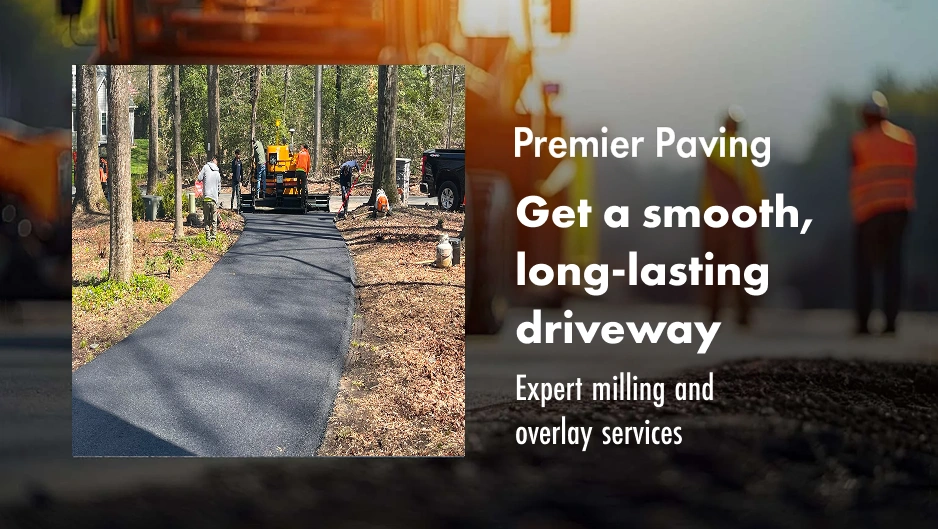
With over 30 years of hands-on experience in residential and commercial paving, Premier Paving MD delivers asphalt milling installation and driveway resurfacing that is built to last. As an MHIC-licensed contractor, we combine top-level craftsmanship with competitive pricing, including exclusive discounts for veterans and first responders. Our family-owned team handles every step, from base assessment and precision milling through to the final overlay and finish, so your driveway comes out level, sealed, and ready to perform through every season.
We are proud to serve homeowners in Annapolis, Severna Park, Pasadena, Arnold, Edgewater, and surrounding areas throughout central Maryland. Whether your project is a residential milled asphalt driveway or a commercial lot resurfacing, we show up, assess the job properly, and deliver results you can see and feel every time you pull in.
Ready to restore your driveway? Contact us today for your free estimate.
Frequently Asked Questions
1) What is asphalt milling and how does it work?
Asphalt milling is the process of mechanically removing the top 1 to 3 inches of deteriorated asphalt pavement using a cold-planing machine. The machine grinds away cracked or uneven surface material, leaving a clean, textured base that bonds with a new asphalt layer, restoring durability and proper drainage without full pavement removal.
2) Is asphalt milling better than full driveway replacement?
Milling is the better choice when the base layer is structurally sound and only the surface is failing. It costs considerably less than full replacement and is completed faster. Full replacement is necessary when the base has failed or drainage must be corrected from below the surface.
3) How long does an asphalt milling driveway last?
With proper installation and regular seal coating every 3 to 5 years, a milled asphalt driveway can last 20 to 30 years. Freeze-thaw climate conditions make professional compaction and proper drainage especially important for longevity.
4) What are the benefits of using recycled asphalt millings (RAP) for a driveway?
RAP millings are eco-friendly, cost-effective, and bind naturally under heat and compaction. They reduce landfill waste and make a strong budget-friendly driveway surface. Asphalt is recycled at a rate exceeding 99 percent in the US, making it the most environmentally responsible paving material available.
5) Do I need a permit for asphalt milling in Maryland?
Residential driveway milling on private property generally does not require a permit, but work connecting to a county road or near stormwater infrastructure may require county approval. Always confirm with your local jurisdiction before work begins.
6) What is the difference between asphalt milling and asphalt overlay?
Milling removes the damaged top layer before applying new asphalt, ensuring a better bond and a level surface. An overlay applies new asphalt directly on top of the existing surface, which is cheaper short-term but raises grade levels and is less durable over time. Asphalt overlay vs milling is a common trade-off. When the base is sound, milling always produces a superior long-term result.
7) How do asphalt millings compare to gravel for driveways?
Asphalt millings outperform gravel in most residential settings. They bind together under heat and traffic, produce less dust, are easier to snowplow, and do not scatter. Gravel is cheaper upfront but requires ongoing regrading and material top-offs.
8) What happens to the milled asphalt material after removal?
Milled asphalt (RAP) is collected and transported to a recycling facility where it is screened, processed, and reused as aggregate in new hot-mix asphalt or as a standalone driveway surface. This recycled asphalt driveway installation approach is both cost-effective and environmentally sound.
9) What is the best time of year to mill and repave a driveway?
Late spring through early fall is the optimal window. Asphalt paving requires ambient temperatures above 50 degrees Fahrenheit for proper compaction. Avoid scheduling work during wet conditions or when overnight freezing is forecast within 24 hours of paving.
10) How do I find a reputable “asphalt milling contractor near me”?
Look for MHIC-licensed contractors, check Google reviews, ask for proof of insurance, and request at least two or three itemized estimates. Confirm the contractor specializes in asphalt milling contractors work, not just general paving. Premier Paving MD (MHIC #147084) serves the full central Maryland area.