
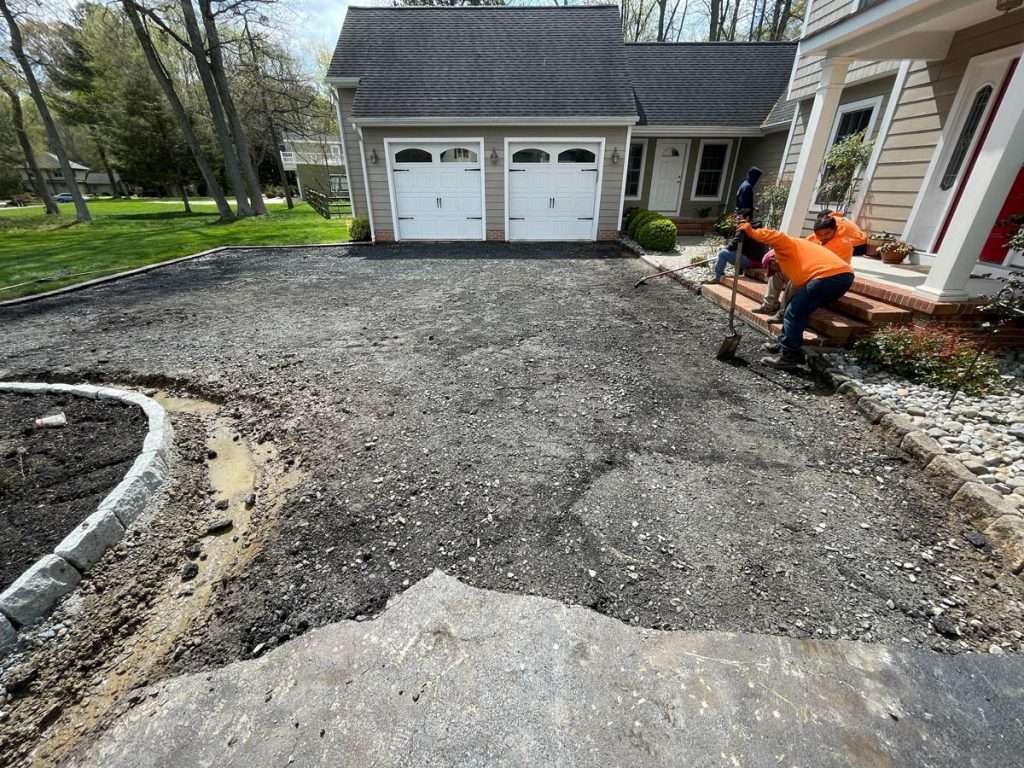
Cracks, potholes, standing water, or sinking sections are signs that your driveway needs attention. Some of these problems only need asphalt driveway repair. Others mean the base underneath has failed and it requires an asphalt replacement.
- Surface problems can usually be handled with crack sealing, patching, or resurfacing.
- Problems that start in the base, usually for a deeper repair or full replacement.
This guide covers:
- The seven warning signs we look for when we walk a driveway
- What each one usually means
- The level of work a warning sign requires
- What affects cost
- How to decide between repair, resurfacing, and replacement
Check our driveway inspection guide walks through how to check your surface step by step.
Why the Base Matters More Than the Surface
A durable paved surface starts below the visible asphalt. The asphalt layer is only as strong as the base, grading, and drainage underneath it.
When water gets through cracks and saturates the base, the stone loses its ability to support vehicle weight. Freeze-thaw cycles make this worse and it makes water expand as it freezes, opens cracks wider, and loosens material below the surface.
Two driveways with similar cracks can need different repairs.
- One asphalt driveway may only need sealing
- Another driveway may need the failed section cut out
7 Warning Signs Your Driveway Needs Attention
1. Alligator Cracking
Alligator cracking is a web of connected cracks that looks like reptile skin.
It usually shows up where tires travel most.
What it usually means:
The pavement is no longer supporting the load. The alligator cracking pattern can be linked to:
- A weak or saturated base
- Inadequate asphalt thickness
- Layers that have separated.
Typical fix:
Crack filler and sealcoating do not correct alligator cracking. A small, isolated area can often be removed and rebuilt with a full-depth patch. When the pattern covers large parts of the driveway, asphalt driveway replacement is usually the more practical option.
2. Wide, Growing, or Recurring Cracks
Thin hairline cracks from age and temperature change are a common thing. The ones to keep an eye on are:
- Cracks wider than about a quarter inch
- Cracks that reopen after being filled
- Long cracks running down the driveway or along a seam
- Cracks with weeds, crumbling sides, or sunken edges
What it usually means:
Water is getting in, and the crack is still moving.
Typical fix:
Low-severity cracks can be cleaned and sealed. Wider, numerous, or moving cracks may need routing and sealing, patching, or a new surface layer.
It is worth learning more about crack filling and pothole repair services and how it covers the professional side of this type of asphalt repairs.
3. Potholes and Soft Spots
Potholes form when water weakens the material under the asphalt and traffic breaks the surface apart. A soft or spongy spot that gives under foot or under a tire is often an early pothole.
What it usually means:
The base is already compromised in that area.
Typical fix:
A cold patch can serve as a temporary measure. A lasting asphalt driveway repair removes the loose material, corrects the base, and places compacted hot asphalt. Several potholes across the driveway point toward a larger base problem.
4. Standing Water and Ponding
After rain, water should drain off the driveway rather than sit on it.
Puddles that remain for hours, sometimes called birdbaths, are a warning sign.
What it usually means:
The driveway has lost its slope, the surface has settled, or water from downspouts and surrounding grades is running onto the pavement.
Typical fix:
Shallow low spots can sometimes be leveled. Ponding caused by poor slope or drainage usually needs driveway grading as part of the repair. Proper grading and drainage planning can reduce ponding and direct water more effectively. Patching over a drainage problem without correcting it tends to bring the damage back.
5. Sinking, Ruts, or Heaving
Watch for sections that dip, tire ruts that hold water, or areas that rise and buckle after winter.
What it usually means:
Settlement of the soil below, poor original compaction, or frost heave, where frozen moisture in the ground pushes the pavement upward.
Typical fix:
These are base and subgrade problems, so surface treatments will not level them. Localized areas may be excavated and rebuilt. Widespread movement usually calls for replacement with corrected grading and base.
Check our guide to frost heave and drainage damage to learn more about this asphalt issue.
6. Crumbling Edges
Driveway edges often have less support than the center, especially when cars drive off the side or soil erodes along the shoulder.
What it usually means:
The edge has lost support from the base or the surrounding ground.
Typical fix:
Early edge cracking can be sealed. Broken or missing edges usually need the edge cut back, the base rebuilt, and new asphalt placed and compacted. Shoring up the soil along the edge helps the repair hold.
7. Faded, Rough, or Raveling Surface
New asphalt is dark and smooth.
Over time, sunlight and weather oxidize the binder that holds the stone together. The surface turns gray, feels rough, and starts shedding loose stones.
This loss of material is called raveling.
What it usually means:
The surface is aging, though the base may still be sound.
Typical fix:
If the surface is only faded, sealcoating can slow oxidation as part of a maintenance plan. Sealcoating is a preventive treatment. It does not repair structural cracks or base failure. When raveling is advanced, driveway resurfacing with a new asphalt layer is usually the better choice.
Repair, Resurface, or Replace: How to Decide
The right level of work depends on where the damage starts and how much of the driveway it affects.
| Option | Usually fits when | What it involves |
| Repair | Damage is isolated: a few cracks, a pothole, a damaged edge | Crack sealing, surface patching, or full-depth patching of failed sections |
| Resurface | The base is solid, but the surface is worn, oxidized, or has many small cracks | Repairing failed spots, cleaning, applying a tack coat, and placing a new asphalt layer |
| Replace | Widespread alligator cracking, settlement, drainage failure, or repeated repairs | Removing the old asphalt, correcting grading and base, and installing a new driveway |
A few practical questions help narrow it down:
- Is the damage in one area or spread across the driveway?
- Do cracks reopen or spread after being repaired?
- Does water sit on the surface after rain?
- Are there sinking or soft areas?
- Would the combined cost of several repairs approach the cost of a new surface?
- Does the driveway need to change size, shape, or slope anyway?
What Homeowners Can Handle and What Needs an Asphalt Paving Contractor
Some maintenance is reasonable for a homeowner. Other work needs equipment and an assessment of what is happening below the surface.
Generally suitable for homeowners:
- Sweeping debris and removing weeds from cracks
- Cleaning oil and fluid stains
- Filling small, nonstructural cracks with a rubberized crack sealant
- Placing a cold patch as a temporary fix until a permanent repair is scheduled
- Keeping downspouts and gutters directing water away from the driveway
Better for a professional paving contractor:
- Alligator cracking
- Potholes that return after patching
- Sinking, heaving, or rutted areas
- Ponding caused by slope or grading
- Broken edges
- Resurfacing or full replacement
Consumer crack fillers and cold patch products can help in the short term, but they are not appropriate for every crack. Cold patch does not bond or compact the way hot asphalt does, so it is best treated as a temporary repair.
What Affects Asphalt Driveway Repair Cost
Pricing depends on the property and the approved scope. A site assessment is needed for an accurate proposal. The main cost factors include:
- Size of the damaged area
- Type of repair: crack sealing, surface patch, full-depth patch, resurfacing, or replacement
- Condition of the base and how much needs to be rebuilt
- Grading and drainage corrections
- Removal and disposal of old asphalt
- Asphalt thickness
- Edges, transitions, and connections to the garage, walkways, or street
- Access for equipment
- Weather and timing
How Premier Paving Approaches Asphalt Driveway Repair
Our process starts with understanding why the driveway failed, not just where.
- Inspect the surface: we look at crack patterns, potholes, edges, and surface wear.
- Identify failed areas: we separate surface damage from areas where the base has lost support.
- Evaluate drainage: we check slope, low spots, downspouts, and how surrounding grades send water onto the pavement.
- Recommend the right level of work: that may be sealing and patching, driveway resurfacing, or a new driveway.
- Prepare the base: failed material is removed and the base is rebuilt and compacted where needed.
- Place and compact the asphalt: edges and transitions are finished so the repair ties into the existing surface.
- Explain reopening and maintenance: we let you know when the surface can be used and how to care for it going forward.
When replacement is the better choice, the same approach applies to asphalt driveway installation: grading, base preparation, compaction, and drainage come first.
Plan Your Driveway Repair with Premier Paving
Premier Paving is a family-owned paving company with more than 30 years of combined experience serving Maryland property owners. We handle asphalt driveway repair, crack and pothole repair, resurfacing, grading, and full driveway replacement for residential properties, and we give practical recommendations based on what your driveway actually needs.
When we assess your surface, we explain what we see, what is causing it, and the options that fit your budget and goals. When replacement is the right call, we build it correctly from the base up.
We work with homeowners in Annapolis, Baltimore, Bowie, Arnold, Pasadena, and more Maryland communities.
Get a free estimate and we will help you decide whether repair, resurfacing, or replacement makes the most sense for your driveway.
Should you repair or replace your asphalt driveway?
Most driveway problems give warning signs before they become major failures. Alligator cracking, potholes, ponding, settlement, crumbling edges, and a worn surface all tell you something about what is happening below the asphalt.
Surface wear can often be handled with sealing, patching, or resurfacing. Damage that reaches the base or comes from poor drainage usually calls for deeper repair or replacement. Knowing the difference helps you avoid paying for repairs that will not last.
Frequently Asked Questions about the warning signs your asphalt driveway needs repair or replacement
How much would an asphalt driveway repair cost?
It depends on the type and size of the repair. The average asphalt driveway repair is around $2,000, with most projects falling between roughly $1,000 and $4,000. Crack filling is commonly priced around $1 to $3 per linear foot, while individual patches often run a few hundred dollars. Base repairs, drainage corrections, and larger areas raise the cost. A site assessment is needed for an accurate price on your driveway.
Is it better to resurface or replace an asphalt driveway?
Resurfacing is usually the better value when the base is solid and the damage is limited to the surface, such as oxidation, raveling, or small cracks. Replacement is usually better when there is widespread alligator cracking, sinking, heaving, drainage failure, or a history of repairs that keep failing. Resurfacing over a failed base tends to let the old cracks come back through the new layer.
How often should an asphalt driveway be replaced?
There is no fixed replacement schedule. Asphalt driveways are commonly cited as lasting about 15 to 30 years, but actual performance depends on base preparation, drainage, traffic, vehicle weight, climate, and maintenance. Replacement makes sense when the base has failed or repairs no longer hold, not simply when the driveway reaches a certain age.
Can an asphalt driveway be repaired?
Yes. Many driveways can be repaired with crack sealing, surface patching, full-depth patching, or resurfacing. The key is matching the repair to the cause. Surface damage responds well to repair. Damage caused by base failure or poor drainage needs the underlying problem corrected, or the repair will not last.
What is the cheapest way to repair an asphalt driveway?
The lowest-cost approach is usually catching problems early. Sealing small cracks and patching isolated damage before water reaches the base costs far less than rebuilding failed sections later. Cold patch and consumer crack fillers can work as temporary fixes, but a lasting repair depends on proper preparation and compaction.
Will new asphalt stick to old asphalt?
Yes, when the existing surface is prepared correctly. The old pavement needs to be structurally sound, cleaned, and repaired where it has failed. A tack coat, a thin asphalt bonding layer, is applied so the new layer bonds to the old one. Poor bonding can lead to slippage, separation, and cracking. Garage floors and other transitions may also need milling so the new surface meets them at the right height.
How much would an asphalt driveway replacement cost?
Common asphalt driveway replacement can go around $8 to $15 per square foot, including removal of the old asphalt. Total cost depends on driveway size, base condition, excavation, grading, drainage work, thickness, and access. Pricing depends on the property and approved scope, so a site visit is the most reliable way to get an accurate number.
Does crack filling prevent potholes?
Crack filling can help slow pothole formation by reducing the amount of water that reaches the base. It works best on small, nonstructural cracks addressed early. It does not fix areas where the base has already failed, and it is not effective on alligator cracking.
Can I fix a pothole in my driveway myself?
You can place a cold patch as a temporary fix by clearing loose debris, filling the hole slightly above the surface, and compacting it firmly. Cold patch is not a permanent repair. If the pothole returns or the surrounding area feels soft, the base likely needs to be repaired by a paving contractor.