
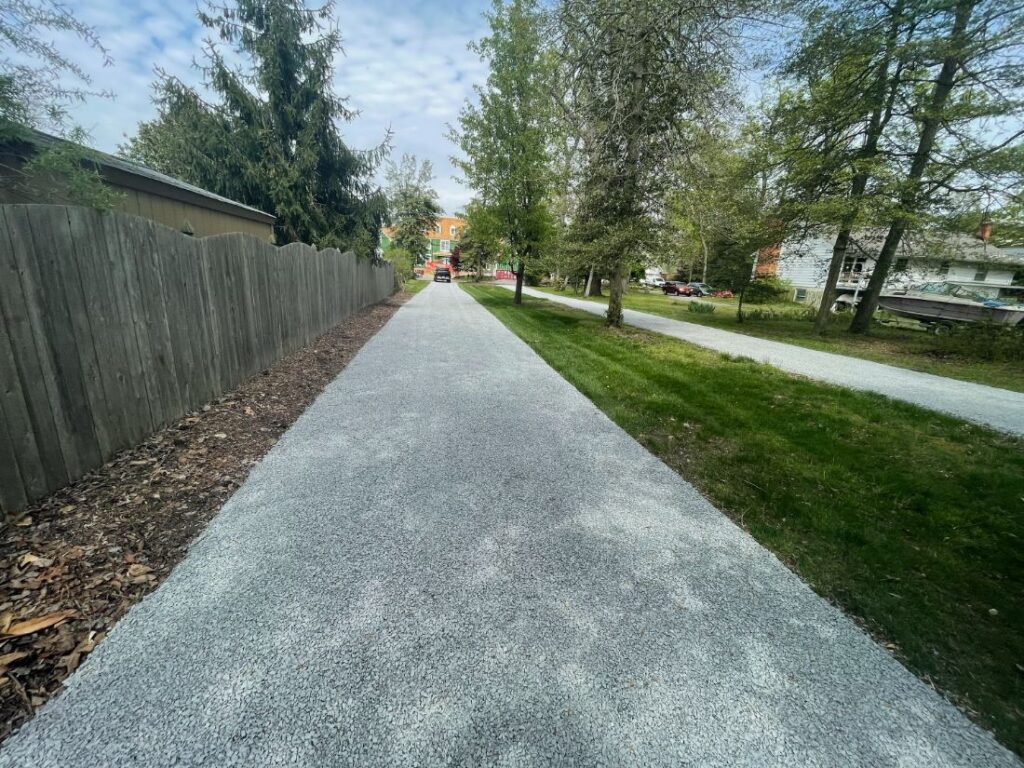
Good gravel driveway maintenance comes down to three jobs: keep water moving off the driveway, keep the surface shaped so it sheds that water, and fix small low spots before they turn into ruts or washouts. Rake and top up thin areas after big storms and at least once a season, keep the edges and drainage paths open, and plan on regrading when ruts keep coming back or the driveway has lost its shape.
Why Gravel Driveways Wash Out and Rut
Almost every gravel problem starts with water. A well-built gravel driveway is a little higher in the middle than at the edges. That shape is called a crown, and it pushes rain off to the sides. Over time, tires press the stone down in two tracks and push loose gravel toward the middle and the edges. The crown flattens, and water starts running down the driveway instead of off it.
Once water travels down the drive, it picks up the smaller stone and fines that hold the surface together. That’s how you get a washout: a channel or bare patch where the gravel has been carried away. Ruts form the same way. Water sits in the tire tracks, softens what’s underneath, and the next car pushes them deeper.
Maryland weather speeds this up. Heavy summer storms move a lot of water fast. Freeze-thaw cycles in winter loosen the surface. Flat, low lots on the Eastern Shore and around the Bay can hold standing water for days. Long, sloped driveways in Anne Arundel County see the opposite problem, with runoff picking up speed on the way down.
Signs Your Gravel Driveway Needs Attention
Walk the driveway after a good rain, when problems are easiest to spot.
- Puddles that sit for hours or days after the rain stops
- Tire ruts you can feel when you drive in
- Gravel piled up along the edges or in the grass
- Bare soil or mud showing through the stone
- Small gullies running down the length of the drive
- Muddy water running off the driveway onto the road or lawn
- Potholes that come back in the same spot every time you fill them
One or two of these usually means routine upkeep. Several at once, or the same problem returning again and again, usually points to a shape or drainage issue underneath.
Gravel Driveway Maintenance You Can Do Yourself
Rake and reshape after storms
A sturdy landscape rake is the most useful tool you can own for a gravel drive. After heavy rain, pull stone that has drifted to the edges back toward the center and fill in the tire tracks. The goal is a surface that is slightly higher down the middle, so water rolls off both sides.
Fill low spots and potholes the right way
Don’t just toss fresh stone into a pothole. Loose stone in a wet hole will scatter the first time you drive over it. Clear out any standing water and mud first. Then add gravel in thin layers and pack each layer down. A hand tamper works for small spots. Finish slightly higher than the surrounding surface, since it will settle.
Use stone that matches what’s already on the driveway. Crushed, angular stone locks together better than smooth, rounded gravel, which tends to roll and spread.
Keep the edges and drainage paths open
Water needs somewhere to go once it leaves the driveway. Keep grass, leaves, and pushed-off gravel from building a lip along the edges, because that lip traps water on the surface. If your driveway has a ditch, swale, or pipe under it, clear out leaves and sediment, especially in the fall.
If you’re thinking about digging a new ditch or trench along the driveway, call Miss Utility at 811 first so underground lines can be marked. Maryland law requires notice before you dig, and the call is free.
Plow and shovel with care
Snow removal can undo a season of upkeep in one morning. Set plow blades or snow blowers a little above the surface so you don’t scrape the stone into the yard. Expect to rake some gravel back into place in the spring.
How to Handle Washouts
A small washout, a few feet long and a couple of inches deep, can usually be filled and packed like a pothole. The bigger question is why it happened. If water is running down the middle of the drive, the crown is gone. If it’s cutting along one edge, something is blocking water from leaving the driveway on that side.
Filling a washout without fixing the water path just means filling it again after the next storm. Large or repeat washouts, especially on slopes, usually call for reshaping the driveway and adding a proper way for water to get off it. That’s grading work.
How to Fix Ruts
Shallow ruts can be raked out. Pull gravel from the high center strip back into the tracks, add a little fresh stone, and pack it down.
Deep ruts are a different story. If you can see soft mud or soil at the bottom of a rut, the base under the gravel is failing. Adding more stone on top won’t hold. The soft material underneath has to be dealt with, and the surface rebuilt with a solid base and a crown.
When to Regrade a Gravel Driveway
Regrading means reshaping the whole driveway, not just patching spots. It brings back the crown, corrects the slope, and gets water moving off the surface again. It’s time to consider regrading when:
- Ruts or potholes come back within weeks of being filled
- The driveway is flat or dips in the middle instead of crowning
- Water runs toward your garage, house, or a neighbor’s yard
- Washouts appear in the same place after every heavy storm
- The stone layer is so thin that soil is mixing into the surface
Regrading is a job for equipment, not a rake. Premier Paving installs and repairs stone and gravel driveways across Maryland and offers grading services for driveways and site work. We look at how water moves across the whole property, not just the driveway surface.
Maintenance, Repair, or a New Surface?
Most gravel driveways can be kept in great shape with regular raking and an occasional regrade. Gravel is a practical, budget-friendly surface, and our post on stone and gravel driveway services covers what makes it a good fit for long and rural driveways.
If you’re tired of chasing ruts and loose stone, though, it’s worth comparing other options. Recycled asphalt millings are one choice many homeowners look at, and we explain why in Five Reasons You Should Use Asphalt Millings Instead of Gravel. On a free estimate, we’ll tell you honestly whether your gravel driveway needs routine maintenance, a regrade, or a different surface.
When to Call a Pro
Call a professional when:
- Ruts, potholes, or washouts keep coming back after you fix them
- Water is heading toward your house, garage, or basement
- The driveway is steep, long, or has lost its shape
- You see mud or soft soil under the stone
- Fixing it would mean digging new ditches or adding drainage
Premier Paving is a family-owned Maryland paving contractor (MHIC #147084) based in Stevensville, with a combined 30+ years of experience. We work with homeowners across the region, from Kent Island to Annapolis and beyond. Call 443-699-9831 or request a free estimate, and we’ll come take a look at your gravel driveway.